Quick Answer
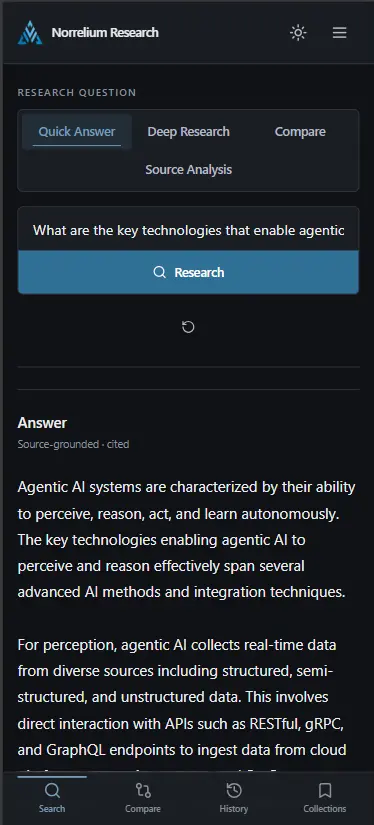
Focused questions return a concise source-grounded answer with numbered citations, ranked source cards and suggested follow-ups.
 Book an AI discovery callBook a call
Independent engineering case study
An evidence-first AI research environment that turns current web information into inspectable answers, multi-pass reports, comparisons and source analyses—while keeping claims linked to supporting material.
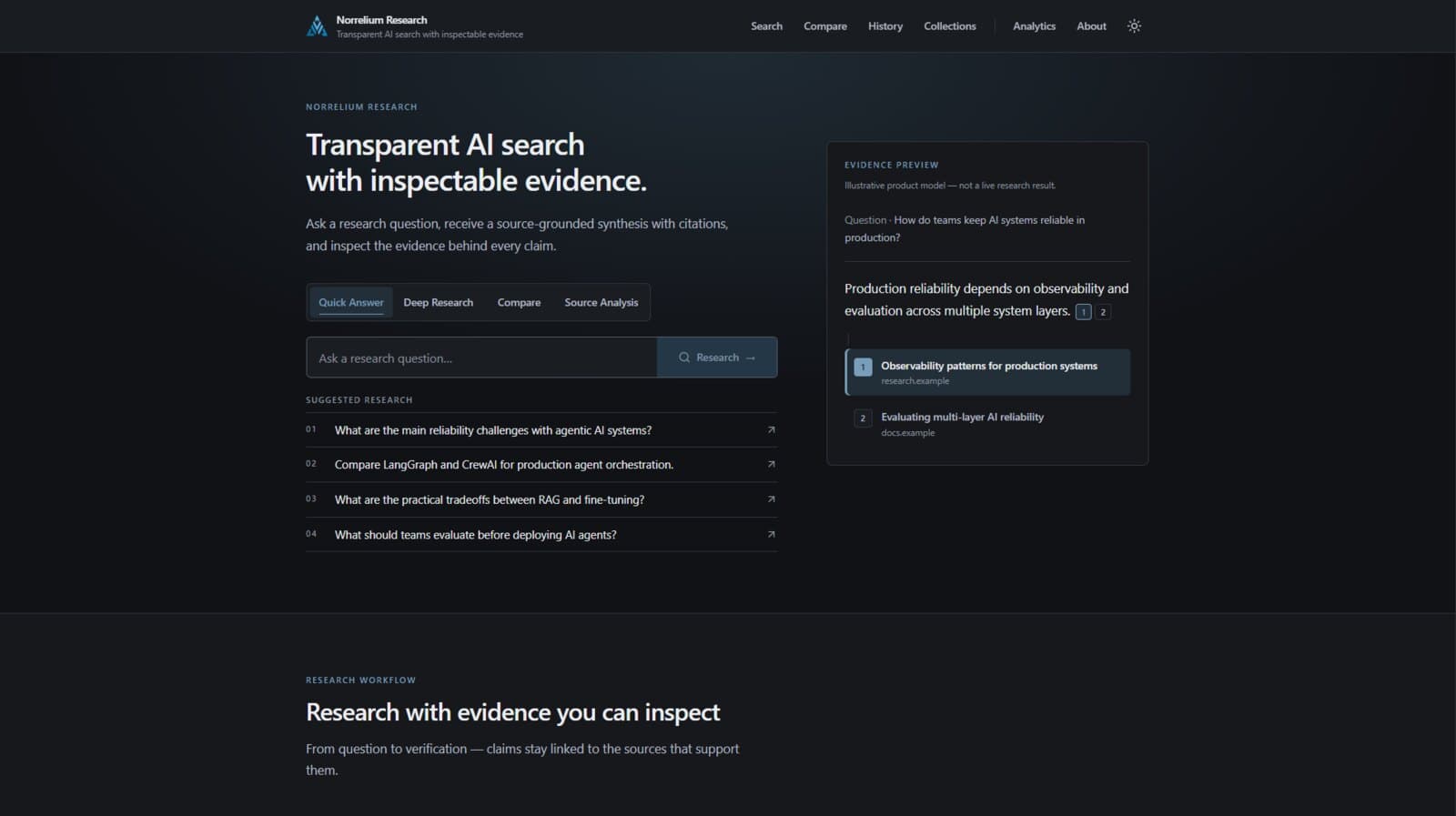
PRODUCT DEMONSTRATION
This 2 minute 21 second product demonstration follows Quick Answer, Deep Research, Compare, Source Analysis and the reusable research workspace.
01 / EVIDENCE
Conventional search leaves people to verify and synthesize a list of links. Fluent AI answers remove that work, but can become difficult to challenge when source selection, citation coverage and evidence quality remain hidden.
02 / EVIDENCE
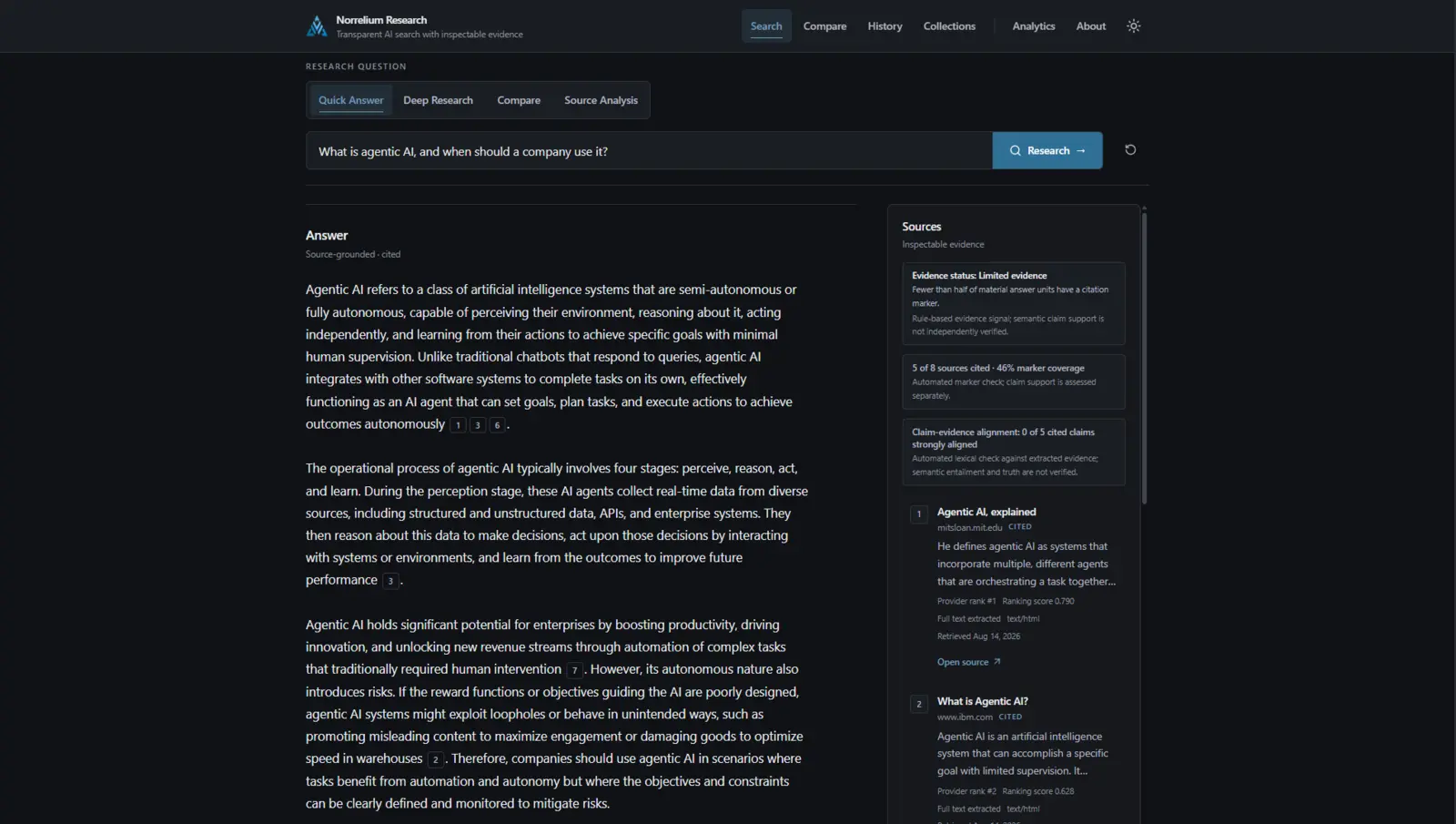
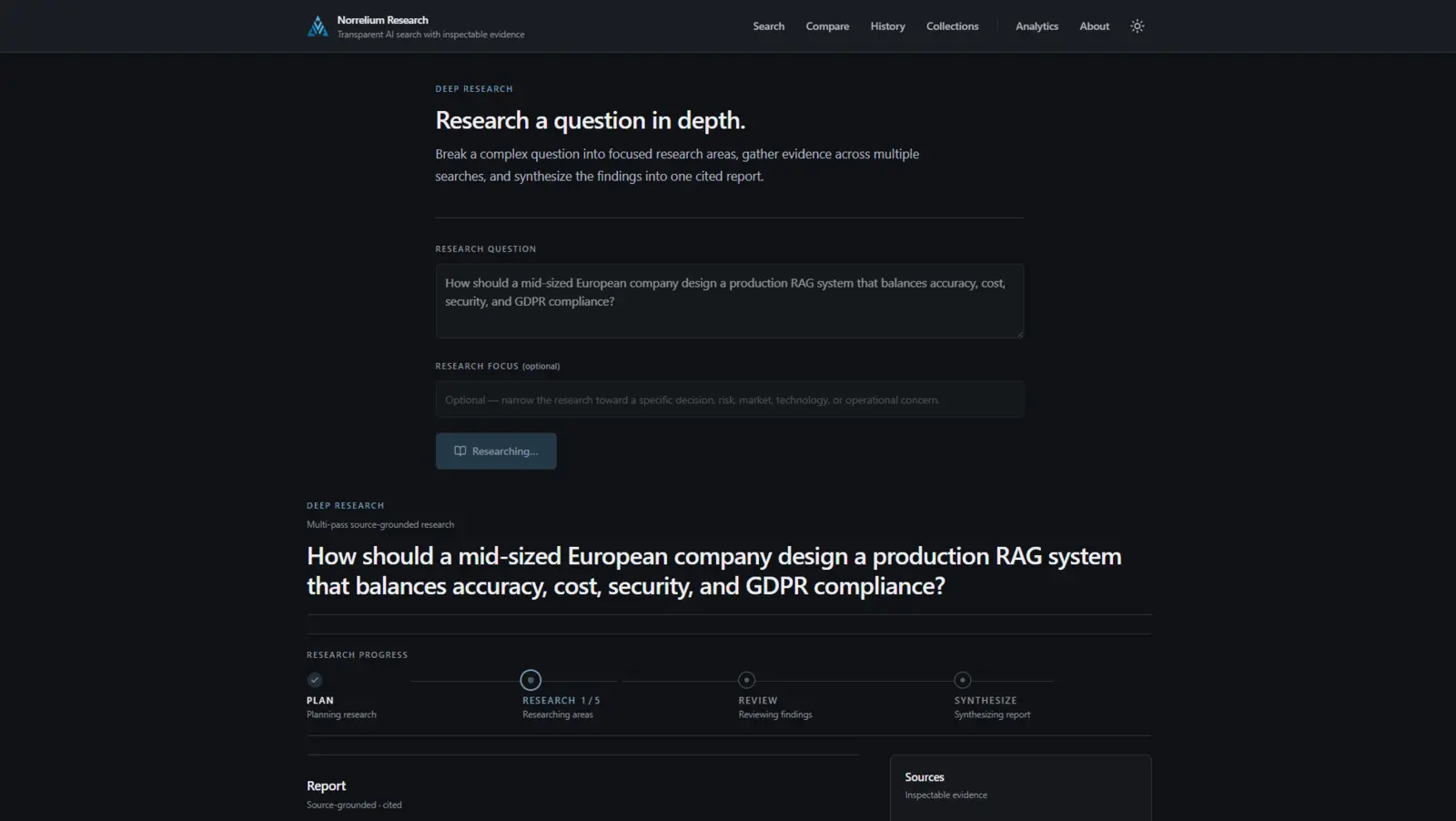
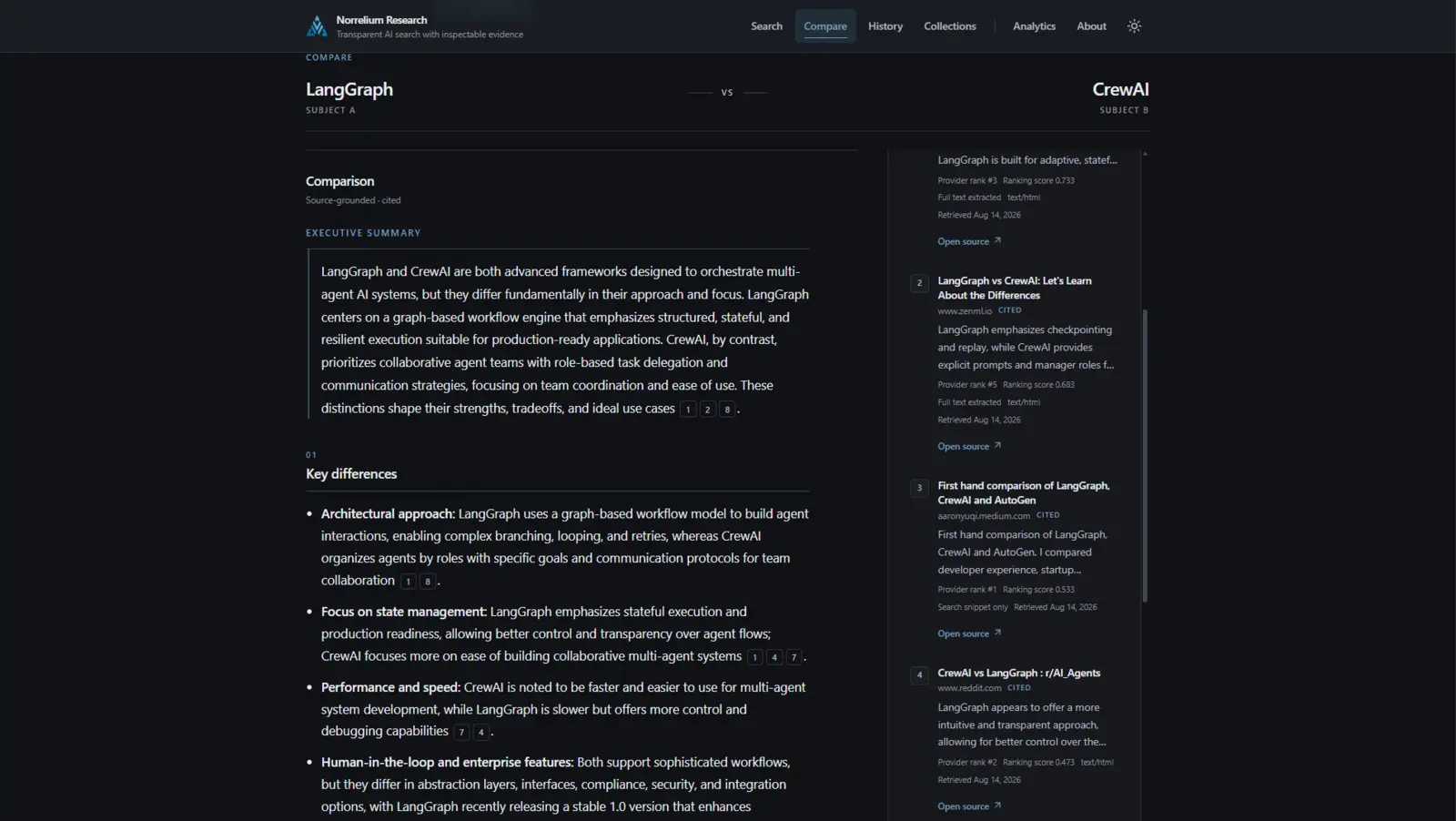
The same evidence-first workflow adapts to different research tasks instead of forcing every question through one generic answer format.
Focused questions return a concise source-grounded answer with numbered citations, ranked source cards and suggested follow-ups.
Complex questions are broken into research areas, investigated across multiple passes and synthesized into a structured cited report.
Two alternatives are evaluated against the same question, keeping key differences, trade-offs, conclusions and supporting sources together.
A submitted publication is summarized, decomposed into claims and examined through visible evidence and independent checks.
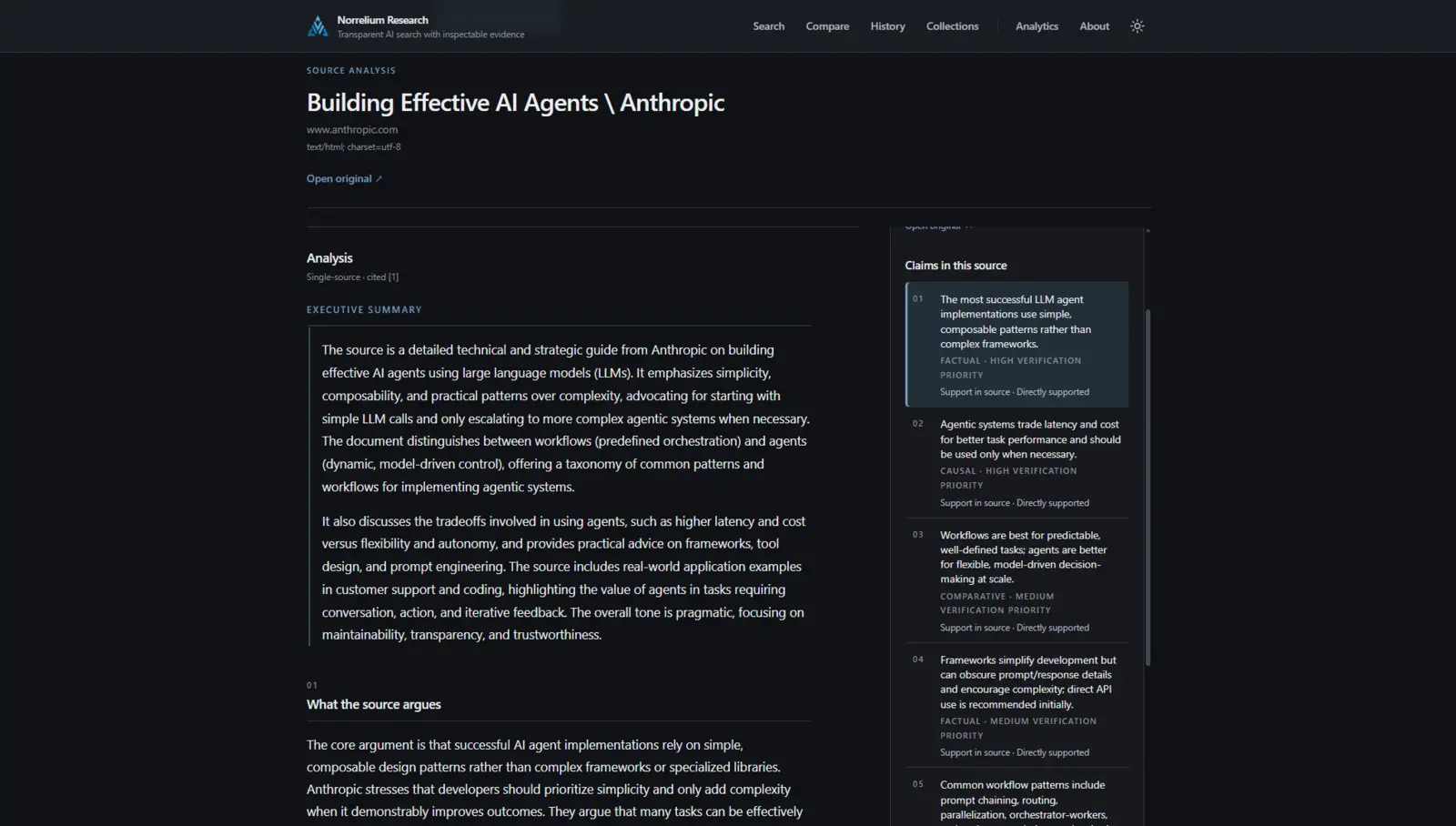
03 / EVIDENCE
Citation markers connect claims to ranked source cards containing the publisher, retrieval date, extraction status and evidence excerpt. Coverage and alignment signals make incomplete support visible, while clearly stating that automated checks do not establish factual truth.
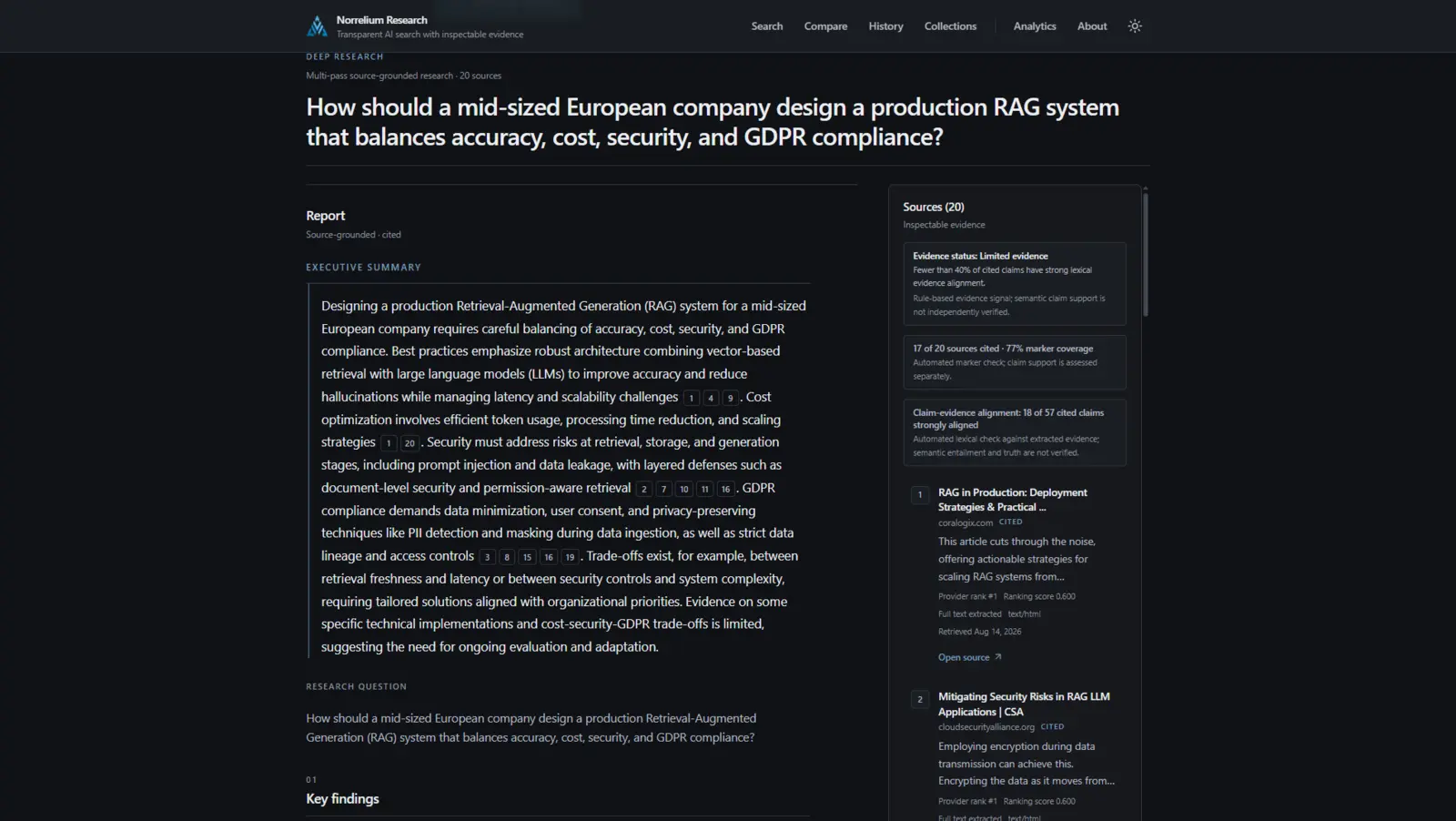
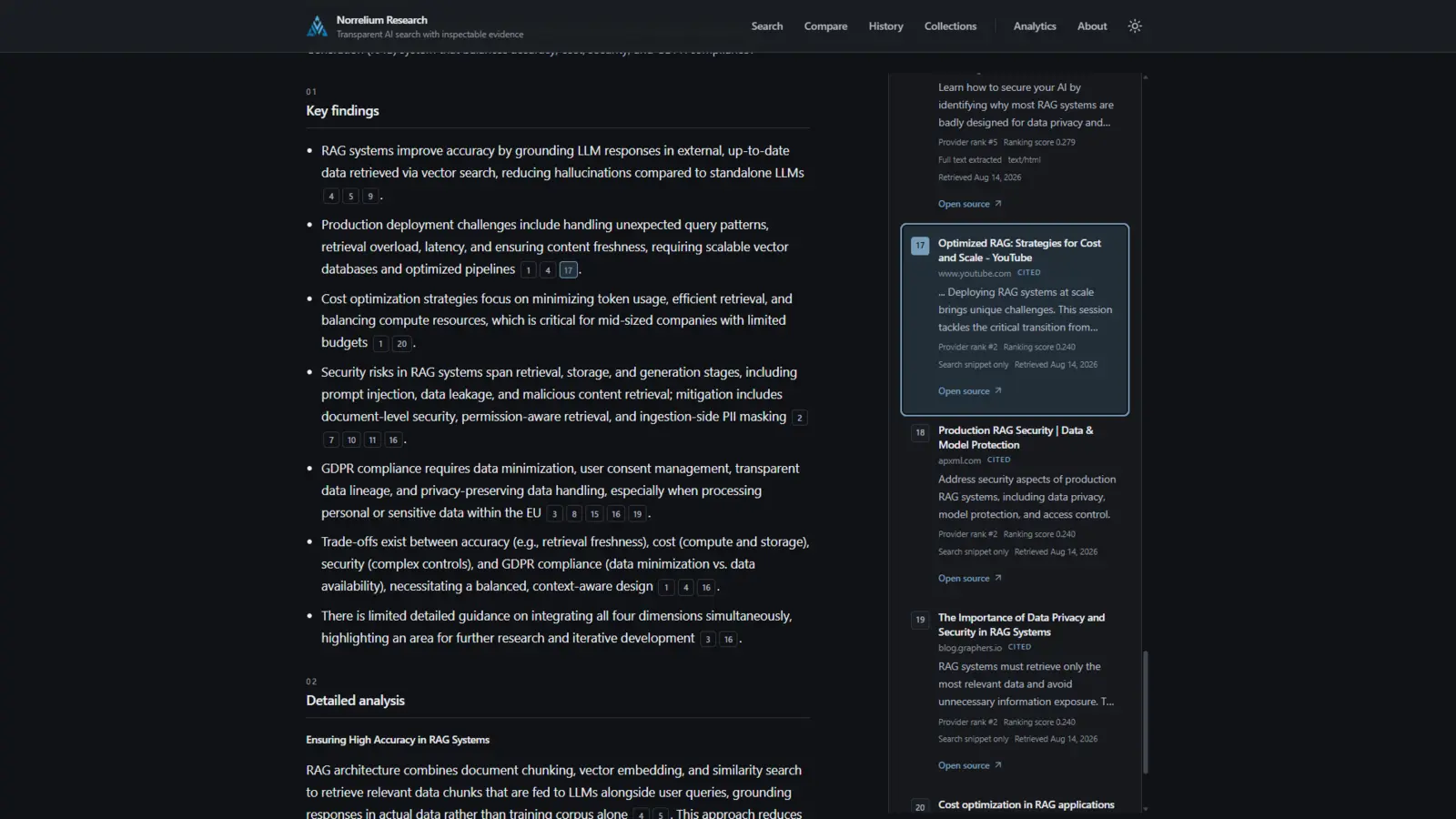
04 / EVIDENCE
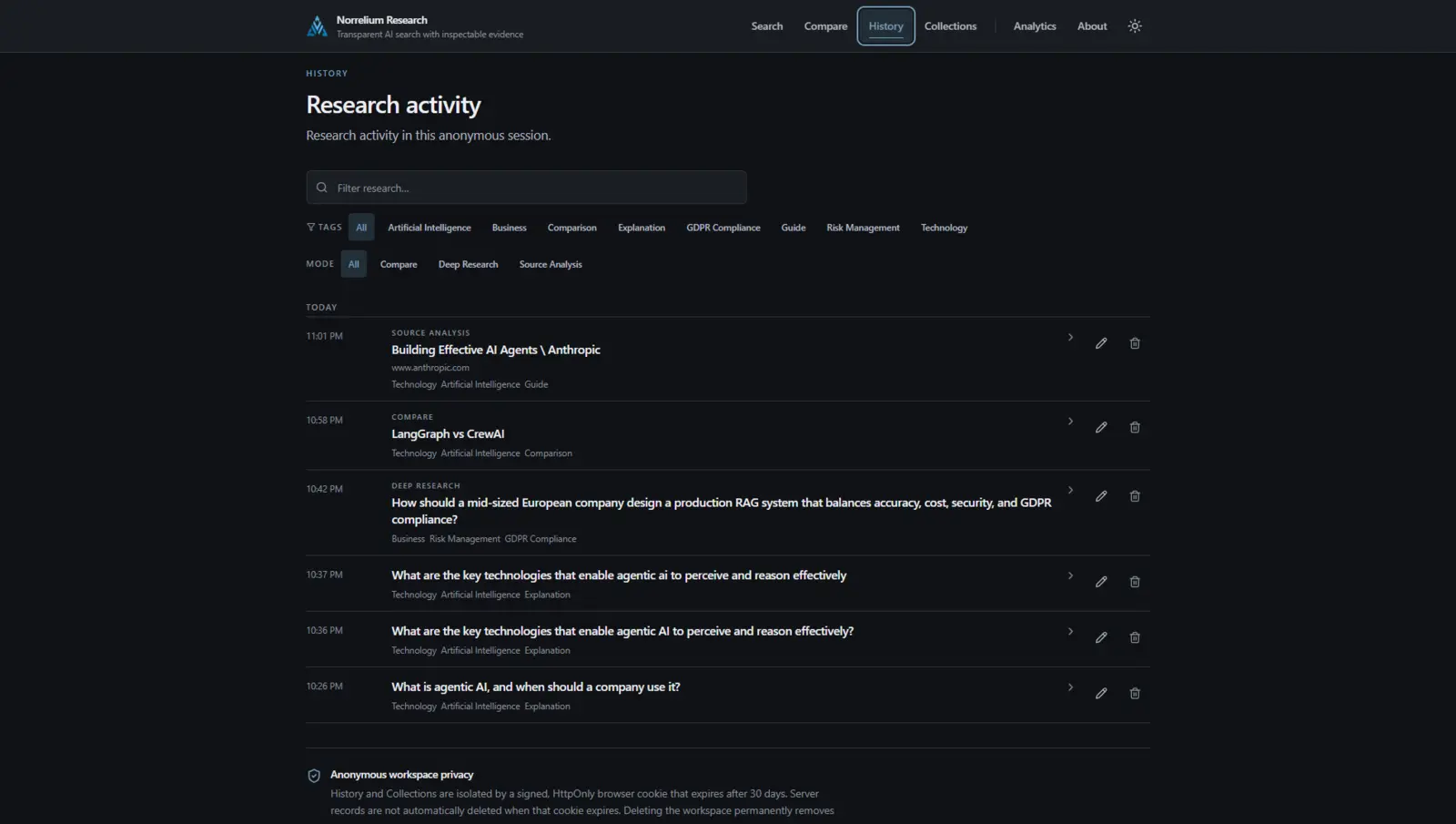
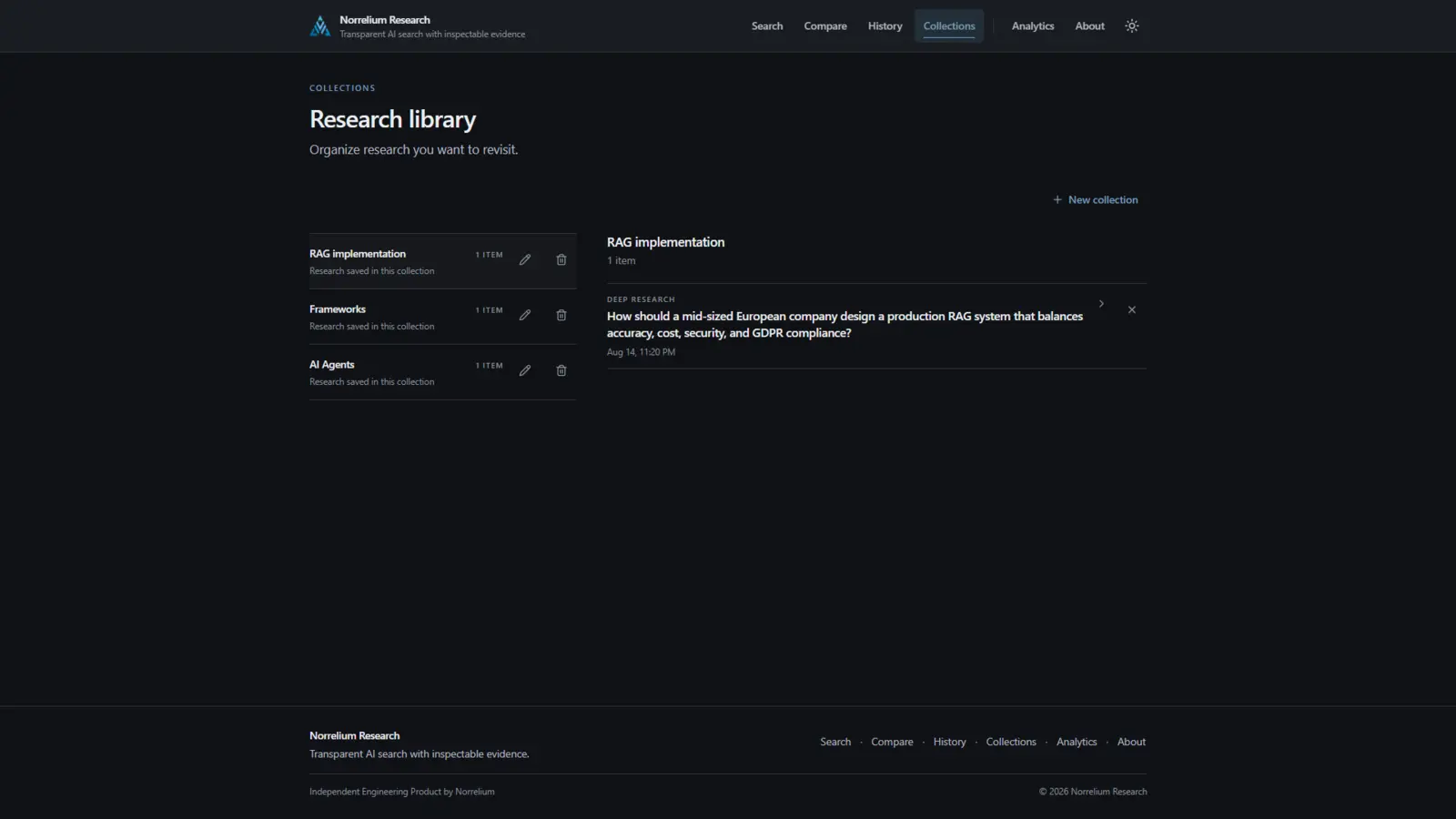
Completed work is not discarded after the first answer. Users can continue a question, export or save a result, revisit session history and organize useful findings into named collections.
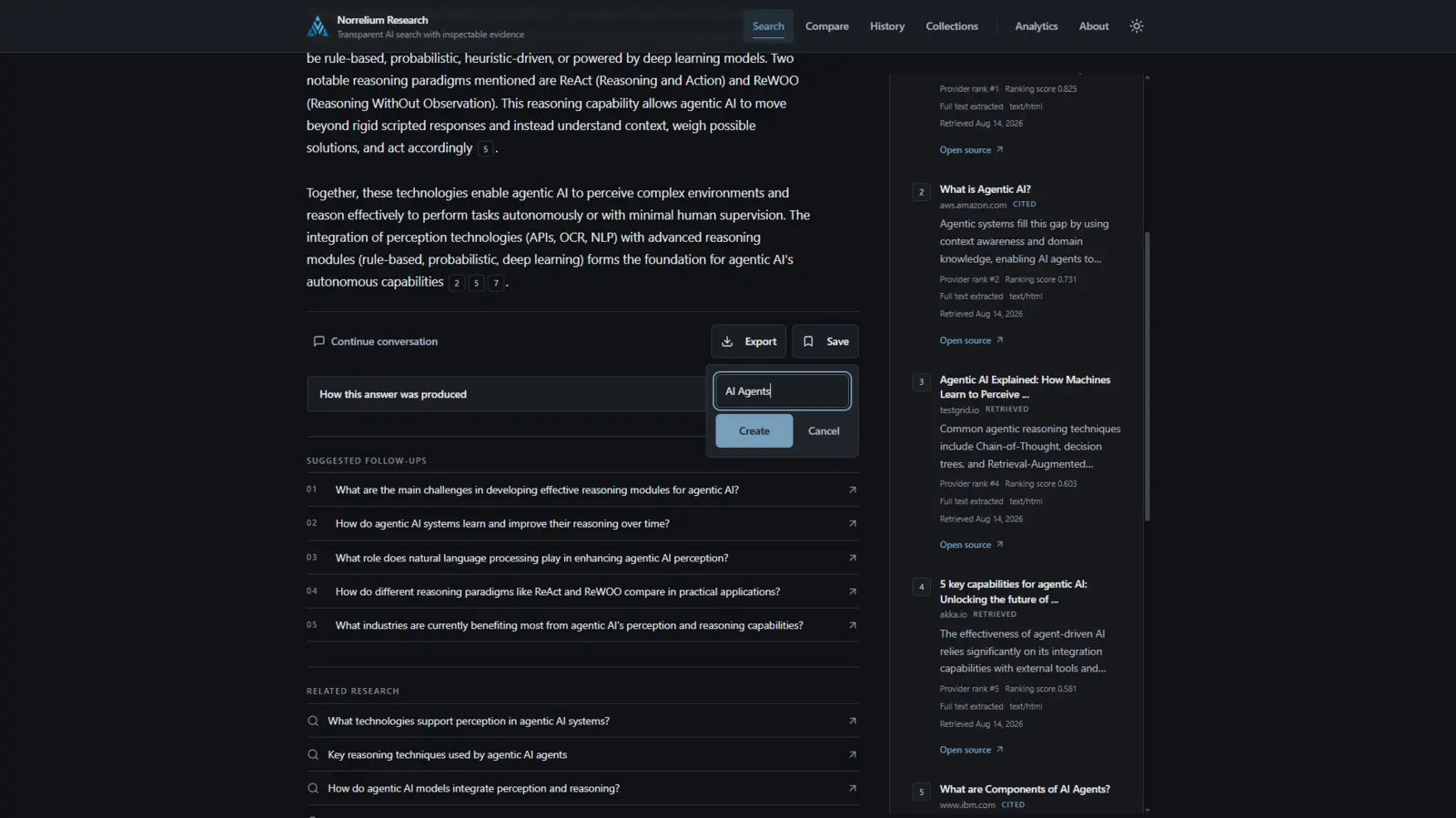
05 / EVIDENCE
A Next.js application on Vercel proxies requests to a FastAPI service on Railway. LangGraph coordinates search, extraction, ranking and synthesis; external retrieval comes from Serper or Brave Search, OpenAI produces cited synthesis, Upstash Redis supports caching and rate limiting, and Supabase PostgreSQL stores research state.
06 / EVIDENCE
The evidence snapshot was validated on 13 August 2026. Automated gates covered API contracts, anonymous-session isolation, persistence, citation mechanics, workspace behaviour, security controls and production build integrity.
API contracts, isolation, persistence, retrieval hardening, workspace controls, retries, security, observability and rate limiting.
Deterministic checks for rank binding, invalid markers, duplicate accounting and declared-versus-visible citation coverage.
Saved results, citation integrity, Compare follow-up, research metadata, Source Analysis and workspace behaviour.
Frontend lint, TypeScript checking, production build and deployed production smoke testing completed successfully.
07 / EVIDENCE
The browser never receives provider or database credentials. A signed HttpOnly anonymous-session token establishes workspace authority; the backend ignores client-supplied project identifiers, keeps service credentials server-side and validates external URLs and redirects before extraction.
08 / EVIDENCE
This is a tested independent engineering case study, not evidence of commercial adoption or an enterprise service-level guarantee. Generated answers can still be incomplete or wrong, external providers affect freshness and availability, and citation checks verify mechanics rather than semantic entailment or factual truth.
09 / EVIDENCE
End-to-end AI knowledge-system engineering: a multi-mode research product, visible evidence, persistent workflows, evaluation gates, security boundaries and honest limitations brought together in one production-minded implementation.
Next step
Start with the business context, desired outcome and current constraints. We will establish whether Norrelium is a sensible fit.